PHYSICAL
GROUNDING
When the mind begins to spiral into "what-ifs," the body remains in the present. Use your physical environment as a tectonic anchor to halt mental acceleration.
Technique 01
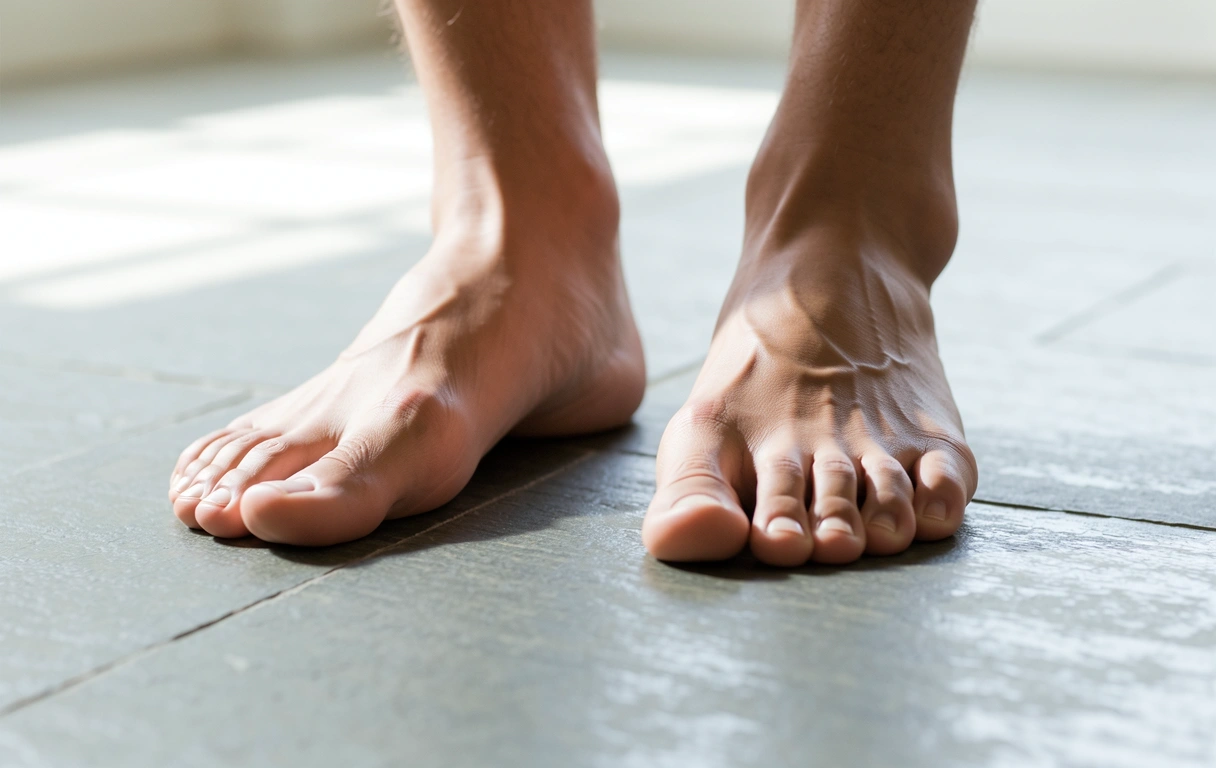
Tactile registration: Acknowledge the weight of your body against the surface beneath you.
The 5-4-3-2-1
Method
This is the gold standard for sensory relaxation. It forces the brain to switch from internal processing (spiraling thoughts) to external observation (the environment).
Combine with BreathVisual Points
Acknowledge five distinct objects in your line of sight. Look for specific details: the grain on wood or a shadow on the wall.
Physical Contacts
Identify four things you can feel. The fabric of your sleeves, the wind on your neck, or the back of a chair.
Auditory Cues
Listen for three sounds. Distance traffic, the hum of a refrigerator, or your own rhythm of breathing.
Olfactory Notes
Pick out two smells. It might be the scent of rain, coffee from another room, or even the lack of a strong scent.
Single Taste
Notice one thing you can taste, or simply the neutral state of your palate.
Progressive Muscle
Tension Release
Isolate & Contract
Squeeze your toes or fists as hard as possible for five seconds. Focus entirely on the sensation of strain.
The Sudden Drop
Relax the muscle instantly. Notice the "flush" of blood and warmth as the tension leaves the area.
Ascending Sequence
Move from your feet to your calves, thighs, glutes, and shoulders until you reach your jaw.
Body Scan Fundamentals
A systematic audit of your physical presence to identify where your body is storing unexpressed stress.
Phase A: Orientation
00:00 - 02:00Sit or lie down in a quiet space comfortably. Close your eyes if safe to do so. Feel the points where your body meets the chair or bed. Start at the crown of your head. Is your forehead tight? Is your jaw clenched? Observe without the need to "fix" it immediately.
Phase B: The Descent
02:00 - 05:00Move your attention to your neck and shoulders. These are primary "stress receptors." Breath into the tightness. Move down the arms, through the elbows, into the fingertips. Notice if one side feels heavier or warmer than the other.
Phase C: Core Integration
05:00 - 08:00Move down the spine, vertebra by vertebra. Acknowledge the rise and fall of your abdomen. Finish at the soles of your feet. Once the scan is complete, imagine your breath moving through your entire body as one cohesive physical unit.
Rapid Response Tools
Select your current environment to find the most effective sensory relaxation technique for your immediate situation.
The Desk Push
Press your palms together or against the underside of the desk. The isometric force creates a sudden physical grounding focus.
Sensory Count
Count only the blue cars or specific street signs. Externalizing focus onto colors prevents internal thought-looping.
Movement safeTemperature Shock
Splash cold water on your face or hold an ice cube. The intense sensation forces the brain to prioritize the skin's surface signal.
High Intensity"The body is a compass that always points to 'Now'."
At Relajacion Rapida, we believe that grounding is not about ignoring your emotions, but about building a stable platform so you can process them without falling. By using sensory techniques, you decouple the stress response from the abstract thought.